How to List Your Apartment in Germany Without a Broker (Landlord Guide 2026)
13. Januar 2026· Updated August 15, 2026
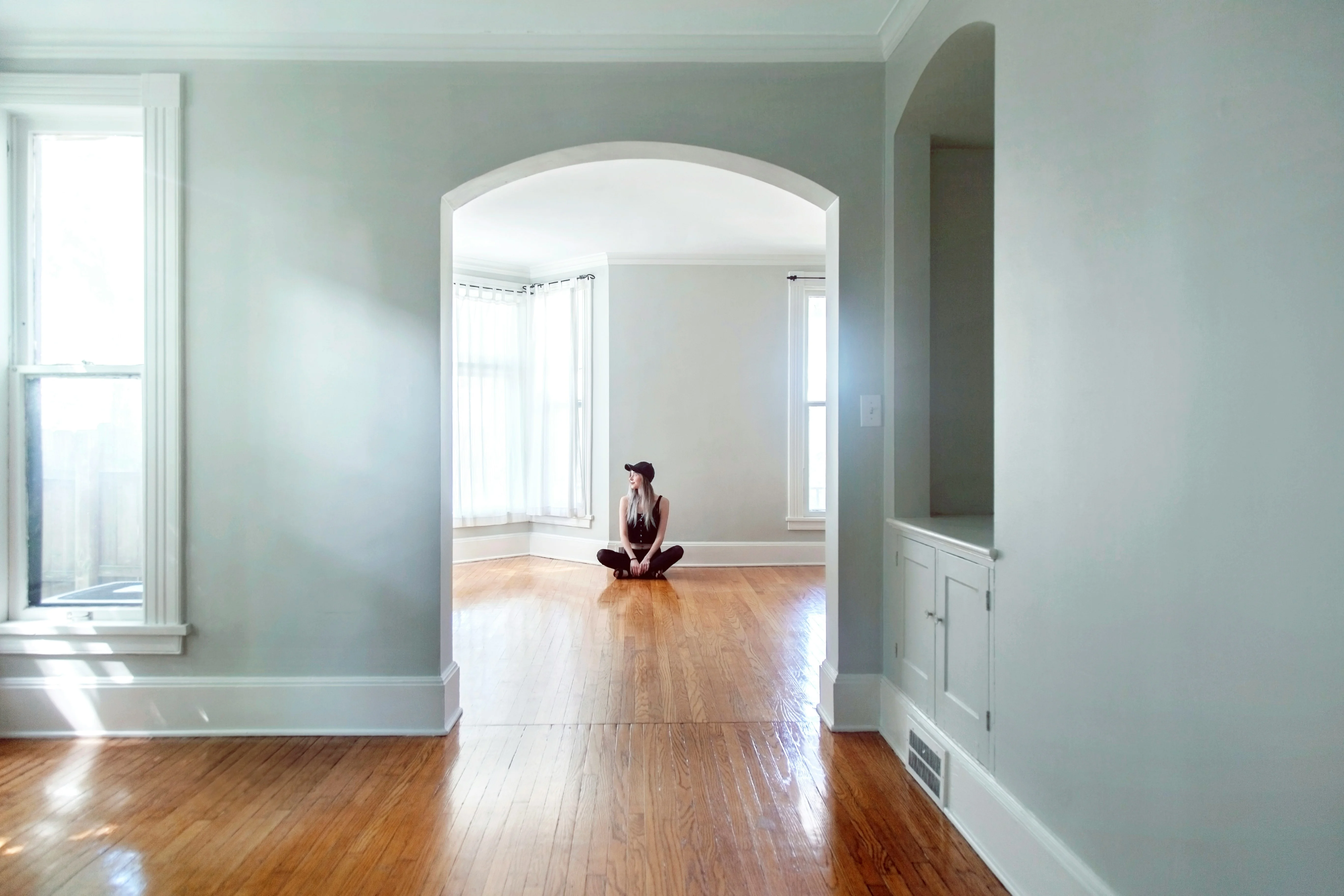
Photo by Kari Shea on Unsplash
This article is for informational purposes only and does not constitute legal advice. We take no liability for actions based on this content.
Listing your apartment without a broker (Makler) in Germany is easier than ever. Since the 2015 Bestellerprinzip law changed how agent commissions work, landlords who hire brokers must pay the commission themselves rather than passing it to tenants. This shift has made many landlords reconsider whether they need a broker at all.
This guide covers everything you need to list and rent your apartment independently: choosing platforms, writing effective listings, taking photos that attract tenants, screening applicants properly, and handling viewings efficiently.
Why skip the broker?
Before 2015, landlords could hire a broker and have the tenant pay the commission (typically two to three months' rent). The Bestellerprinzip ended this by establishing that whoever hires the broker pays them. If you commission a Makler, you pay.
This means using a broker now costs you money directly. For many landlords, especially those with just one or a few properties, this expense is hard to justify when modern platforms make self-listing straightforward.
Benefits of listing without a broker: save the commission fee (often 2+ months' rent plus VAT), maintain direct control over tenant selection, communicate directly with prospective tenants, and better understand what tenants are looking for.
The tradeoff is time. You handle the listing creation, inquiries, viewings, and screening yourself. For landlords who enjoy the process or have time available, this is worthwhile. For those who prefer hands-off management, a broker or property management service might still make sense.
Platform comparison
Several platforms serve the German rental market. Each has different features, costs, and audiences.
Immobilienscout24 has broad reach and tends to draw a lot of applicants, though private listings beyond the basic tier cost extra and the volume means more messages to filter. Immowelt is another widely used option, similar in cost and features, and worth using alongside Scout24 to widen your reach. Kleinanzeigen, the old eBay Kleinanzeigen, is free and works as classifieds; the interface is plainer, but it reaches people who have had enough of premium-platform fees. WG-Gesucht is built for shared flats yet takes whole apartments too, so it is the right room if your place suits a WG. Domily takes a different angle, built around transparency and direct landlord-tenant contact, with no hidden fees, document handling built in, and one payment per listing rather than a subscription; if you want something modern and low-friction you can list your apartment and screen applicants in one place. Whichever you pick, putting the same listing on more than one site is worth it, since you only write it once and copy it across.
Listing on multiple platforms increases visibility. The effort of creating one good listing pays off when you copy it across several sites.
Writing an effective listing
A good listing attracts suitable tenants and filters out unsuitable ones. Clear, honest, detailed descriptions save everyone time.
Lead with the facts a renter checks first, the size in square metres, the number of rooms (remember German counting, where a "2-Zimmer-Wohnung" is one bedroom plus a living room), the neighbourhood and how close it sits to public transport, the Kaltmiete and Nebenkosten spelled out separately, the available-from date, and any minimum term. From there, describe the flat as it really is: the layout and room sizes, whether it is renovated or in original condition, what comes with it such as a fitted kitchen, appliances or furniture, the heating type, the flooring, and any storage or parking. Say a little about the building too, its age, the floor the flat is on, whether there is a lift or only stairs, and how many units share the entrance. A few lines on the area help as well, the transport links and walking distances, the shops and supermarkets, the parks, and whether the street is quiet and residential or busy and central. Then be upfront about who the place is for, any conditions like non-smoking or no pets, the documents you will ask for, and when you are free to show it. What you want to avoid is filler like "nice apartment" or "great location", which tells a renter nothing and slows both of you down.
Taking photos that work
Photos sell apartments. Poor photos lead to fewer inquiries and worse applicants.
Before you shoot, spend ten minutes on the room itself: clean and declutter, open the curtains and blinds, switch the lights on to lift the daylight, clear personal bits off the surfaces, and tidy the obvious things, the beds, the cushions, the mirrors. Then shoot in daylight, hold the phone horizontally and level rather than tilted, stand in a corner so each room reads at its full size, and take several frames of each so you have a choice later. Work through the whole flat, every room from its best angle, the kitchen and its storage, the bathroom, the view from the windows, any balcony or terrace, the entrance and facade, the cellar, and a couple of the nicer spots in the neighbourhood if they help.
Smartphone cameras work fine if lighting is good. The key is thoughtful composition, not expensive equipment.
Consider including a floor plan. Many tenants filter listings by whether floor plans are available. Simple floor plan tools exist online, or you can sketch one yourself.
Setting the right price
Pricing too high means fewer applicants and longer vacancy. Pricing too low leaves money on the table and may attract tenants who will struggle when you eventually raise rent.
Start with the local Mietspiegel, the rent index most German cities publish, which shows typical rents by size, condition, location and features; it is your baseline. Then look at what comparable flats near you are actually asking and aim to sit in that range for your size and condition. Keep the Mietpreisbremse in mind, since in many cities a new tenancy cannot exceed the local Mietspiegel average by more than 10 percent, with exceptions for new builds and comprehensive modernisation, so check the local rules if you are unsure. And weigh the flat's own strengths and weaknesses honestly: a renovated kitchen, good insulation or a balcony earns a little more, while poor light, street noise or an awkward layout usually means pricing a touch lower to fill it.
For Nebenkosten estimates, use historical data from previous tenants or estimate 2-4 euros per square meter as a rough guide. Underestimating Nebenkosten makes your listing look cheaper but causes problems at reconciliation time.
Screening tenants
Good tenant screening reduces problems. You want tenants who pay rent reliably, maintain the apartment, and cause no conflicts.
In practice you ask for a handful of documents. A SCHUFA or credit report shows the applicant's payment history and any defaults, and a clean one is a good sign; they can pull it from meineschufa.de or a free service like Bonify. Proof of income, usually the last three payslips or an employment contract, tells you they can carry the rent, and the common benchmark is a net income of at least three times the Warmmiete; freelancers can show tax returns or invoices instead. A Mietschuldenfreiheitsbescheinigung, a note from the previous landlord confirming the rent was always paid, is useful when it exists, though first-time renters and people coming from abroad often cannot provide one. A copy of an ID or passport confirms who you are dealing with, and a Selbstauskunft, the short self-disclosure form covering job, income, household size and pets, rounds it out; standard versions are available online.
For foreigners without German documents, alternatives include bank statements showing savings, job contracts, or a guarantor (Bürge). More details on tenant documentation in our guide on documents needed to rent in Germany.
Legal requirements for landlords
German law imposes specific obligations on landlords when listing and renting apartments.
You need a current Energieausweis (energy certificate) for any listing, and its figures have to be available to applicants at the viewing; advertising without it risks a fine, and since 2024 that is enforced more strictly, so make sure yours is valid before you publish. The floor area you quote has to be accurate under the official Wohnflächenverordnung, because overstating it can hand the tenant a claim for a rent reduction. You cannot turn people away on the basis of race, ethnicity, religion, gender, age, disability or sexual orientation; your criteria have to tie back to genuine rental concerns like income or references. Applicant data falls under the DSGVO, so ask only for what bears on the decision and delete the files of anyone you reject. And once someone moves in, you must give them the Wohnungsgeberbestätigung within two weeks so they can register their address; refusing it is not lawful.
Managing viewings efficiently
Individual viewings for every applicant take enormous time. Group viewings are standard in Germany and more efficient.
The group approach is the norm here: you invite several applicants to the same slot, show the flat once, answer questions for the room, and collect applications and documents on the spot, which works well when you expect a crowd.
This works well in competitive markets where you expect many applicants. It is less appropriate for high-end properties or situations where you want personal interaction with each candidate.
Individual viewings give you a calmer, deeper read on each person and suit a higher-end flat, at the cost of more of your time.
During viewings: be on time, have the apartment clean and well-presented, bring copies of floor plans or key information, explain practical details (heating, garbage, parking), note your impressions of each applicant, and collect documents or request them be submitted afterward.
Using technology for management
Modern tools simplify landlord tasks. For managing one or a few properties, spreadsheets and email work. For larger portfolios or streamlining processes, dedicated software helps.
Our guide on property management software for landlords covers options including payment tracking, document storage, communication tools, and template generation.
Digital communication through proper channels creates records. Avoiding purely verbal agreements protects both parties.
After finding a tenant
Once you select a tenant, the process continues:
You will need a proper Mietvertrag, ideally from a solid template rather than something cobbled together, since German tenancy law is fiddly and a DIY contract can carry clauses that are simply void; getting a standard one reviewed is worth it. The deposit (Kaution) is capped at three months' Kaltmiete and has to sit in a separate, interest-bearing account. At move-in you walk the flat together, write down its condition and the meter readings in an Übergabeprotokoll, and hand over the keys. And you give the tenant the Wohnungsgeberbestätigung they need to register their address.
How Domily helps landlords
Domily simplifies the landlord experience by combining listing, communication, and documentation in one platform.
Instead of juggling multiple listing sites and email threads, you manage everything from a single dashboard. Document requests and sharing happen within the platform. Communication stays organized.
The pricing model is straightforward: landlords pay €99 per listing, paid once at publish, and every landlord's first listing is free. No monthly fees, no auto-renewal. This makes it cost-effective for landlords with few properties who do not want ongoing software costs.
Tenants benefit from transparency and direct communication, which means better-quality applicants who know what they are applying for.
Summary
Listing your apartment without a broker in Germany is manageable with the right approach. Choose platforms strategically, write detailed and honest listings, take good photos, price competitively, and screen tenants thoroughly.
The time investment pays off through commission savings and direct control over your property. Modern platforms and tools make independent landlording more accessible than ever.
Whether you manage one apartment or several, the key is organization: clear processes for listings, viewings, screening, and documentation. Get these right, and finding reliable tenants becomes straightforward.
Try Domily
Fair renting in Germany. No subscriptions, no auto-renewal, no Inkasso.