Finding an Apartment in Berlin as an Expat: Complete 2026 Guide
16. Januar 2026· Updated August 30, 2026

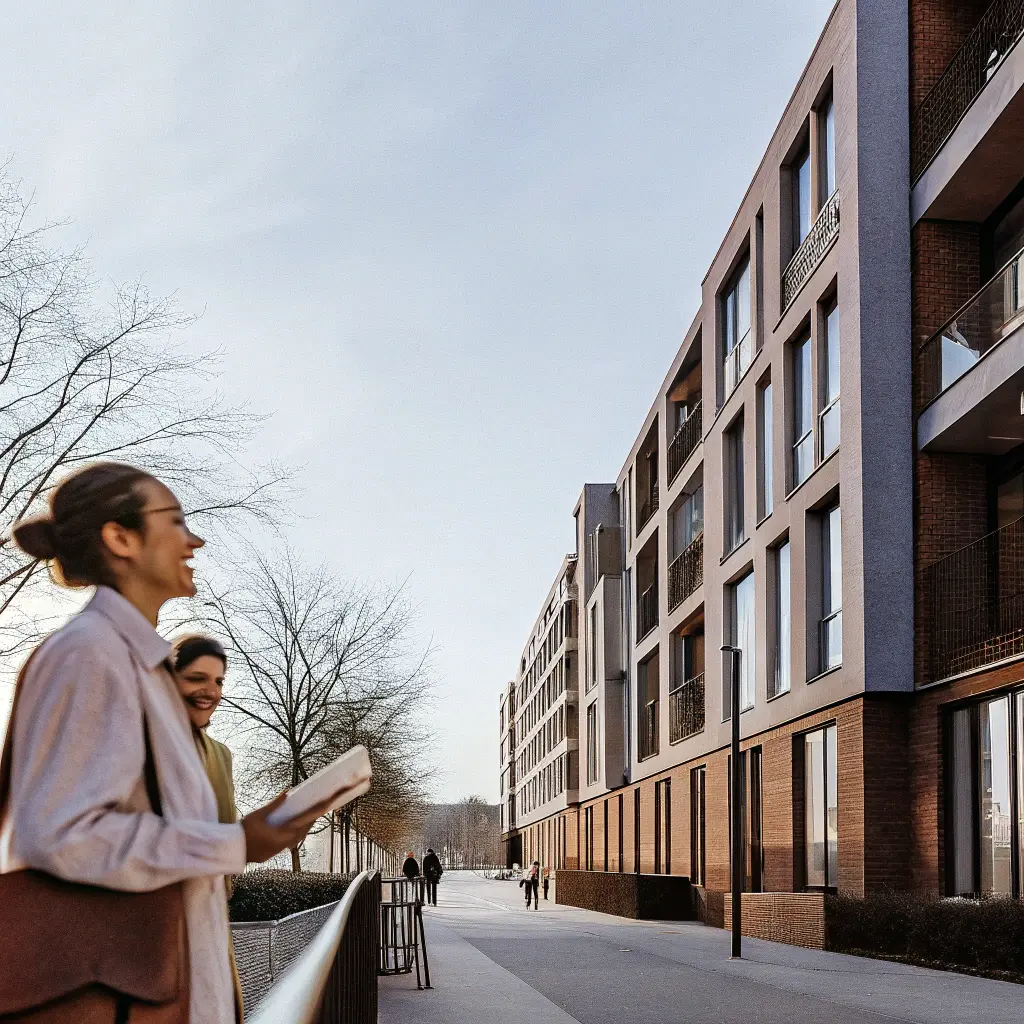
Photo by Florian Wehde on Unsplash
Berlin has long been a magnet for expats: affordable compared to other European capitals, culturally vibrant, and more English-friendly than most German cities. But the rental market has shifted dramatically over the past decade. What was once manageable is now fiercely competitive. Finding an apartment in Berlin as a foreigner requires strategy, preparation, and realistic expectations.
This guide covers everything specific to Berlin: the current market situation, how rent caps work, which neighborhoods to consider at different budgets, the best platforms for Berlin, and practical tips from people who have been through the process.
Berlin market reality in 2026
Berlin's rental market is tight. Vacancy rates are among the lowest in Germany, hovering around 1%. When a decent apartment appears, it often receives 100+ applications within hours. The Berlin Senate's 2026 housing report confirmed that demand continues to outpace new construction, with an estimated shortfall of around 20,000 units per year. Competition is especially fierce for affordable, well-located apartments.
Several factors created this situation. Berlin's population grew faster than new housing construction. Short-term rentals removed thousands of apartments from the long-term market. Investor purchases converted rentals to condominiums. And Berlin's relative affordability compared to Munich or Hamburg attracted more people than the housing stock could absorb.
The result: finding an apartment takes longer than you expect, rejection is common, and persistence is mandatory.
What helps: being flexible on neighborhoods, having documents ready immediately, acting within minutes when new listings appear, widening your definition of acceptable apartments, and considering temporary housing while searching.
For comprehensive guidance on the German rental process, see our complete guide on finding an apartment in Germany as a foreigner.
How the rent cap (Mietpreisbremse) works in Berlin
Berlin implemented the Mietpreisbremse (rent cap) to control rising rents. Under this law, landlords generally cannot charge more than 110% of the local comparable rent (ortsübliche Vergleichsmiete) for most existing apartments.
In practice, when you sign a new lease the rent should not exceed 10% above what similar flats in that area go for according to the Berlin Mietspiegel, and that holds for most existing buildings. The cap does not apply everywhere, though: newly built flats first used after October 2014 are exempt, as are comprehensively modernised apartments and former social housing that has recently moved to market rates. If a rent looks too high to you, you can ask for information about what the previous tenant paid and challenge it if it seems to breach the limit, and the Berliner Mieterverein can help you weigh that up. One thing to keep in mind: the Mietpreisbremse applies to the Kaltmiete only, since Nebenkosten are separate and not capped.
Neighborhood breakdown
Berlin is huge and spread out. Neighborhoods vary dramatically in price, character, and availability. Understanding your options helps you search more effectively.
Central and trendy (expensive, highly competitive)
Mitte is the geographic and administrative centre, expensive and competitive, with good transport but less of the neighbourhood feel that makes Berlin special and, in places, more tourists than locals. Prenzlauer Berg is all beautiful Altbau, tree-lined streets and family parks, hugely popular with young professionals and families and fiercely competitive, so expect premium prices and plenty of rejections. Kreuzberg, especially around Bergmannstraße and the Graefekiez, is vibrant and diverse, loud with nightlife in parts but quietly residential in others, and popular with a younger, creative crowd, so competition is intense. Friedrichshain has a similar feel, a little younger and more party-minded, where rents have climbed a lot but still sit below Prenzlauer Berg, even as they catch up.
Mid-range (better availability, still popular)
Neukölln is gentrifying fast, especially the north near Kreuzberg where it is trendy and competitive, while the south stays more affordable, a mix of working-class residents and newcomers, and well connected throughout. Wedding has a working-class history and is increasingly popular with students and young professionals priced out of the trendier districts, more affordable, ethnically diverse and grittier, and good value if you are open-minded. Schöneberg is a traditional West Berlin area with a real mix of characters, quiet residential streets alongside livelier strips, more established and less trendy than the eastern districts but with solid infrastructure. Charlottenburg is old West Berlin money meeting practical living, with good shopping, transport and services, pricier than Wedding or Neukölln but less of a scramble than the eastern hotspots.
Outer areas (more affordable, longer commutes)
Lichtenberg is East Berlin with a mix of socialist-era blocks and new developments, more affordable, decently connected, and with less character than the central districts. Marzahn and Hellersdorf are Plattenbau neighbourhoods far from the centre, very affordable but a long commute in, and worth it mainly if you are prioritising space and savings. Spandau is essentially its own town out west, with its own centre and affordable housing, though you will feel removed from Berlin's cultural life. Köpenick, in the south-east, has lakes and forests and appeals if you value nature and space over density, again at the cost of a long commute. And Pankow and Weißensee, to the north-east, are family-oriented and suburban in feel, more affordable than Prenzlauer Berg while still being reasonably accessible.
Best platforms for Berlin
Immobilienscout24 is a major platform, though it comes with frustrations: many listings require premium subscriptions to contact, and competition for responses is fierce.
Immowelt has significant Berlin coverage as well. Worth checking alongside Immobilienscout24.
Domily offers a transparent alternative with direct landlord communication and no hidden fees. Particularly useful if you want to avoid the noise and scams common on larger platforms. If you're weighing options across the continent, see the best rental sites for expats in Europe.
WG-Gesucht for shared apartments. Berlin has a strong WG culture, and this platform is essential if you are open to roommates, here's how to use WG-Gesucht in English.
Kleinanzeigen has private listings from landlords avoiding platform fees. More variable quality and higher scam risk, but some good deals exist.
Facebook groups are worth a look as well: groups such as "WG-Gesucht Berlin Community" or "Berlin Apartments for Rent" occasionally carry listings that never make it onto the formal platforms, and they are also good for temporary sublets.
Address registration (Anmeldung) challenges in Berlin
The Anmeldung (address registration) is mandatory within 14 days of moving into a new apartment. Berlin's system is notoriously overburdened, with appointment availability often weeks or months out.
You need the Anmeldung to get a tax ID, open a bank account, register for health insurance, and sign many contracts. But getting an appointment at the Bürgeramt is difficult, especially when you need it urgently.
A few things make it manageable. Book your appointment as soon as you have a signed rental contract. Do not wait until you move in.
Check for cancellations frequently. The online booking system releases cancelled appointments, often early in the morning. Browser extensions that auto-refresh and alert you help.
Try different Bürgeramt locations. Appointments in outer neighborhoods like Spandau or Marzahn are often easier to get than central locations.
Some private services offer appointment booking help for a fee. These are not scams but are expensive for something you can technically do yourself with persistence.
If you cannot get an appointment within 14 days, document your attempts. Having a booked appointment (even if it is later) shows good faith if anyone questions the delay.
For complete Anmeldung guidance, see our detailed guide on address registration in Germany.
Scam awareness
Berlin's competitive market creates opportunity for scammers. As demand far exceeds supply, desperate apartment seekers sometimes let their guard down.
The common patterns are easy to spot once you know them:
The absent landlord: Someone claims to own an apartment but is currently abroad. They ask for deposit or rent before you see the place, promising to mail keys once payment clears. The apartment either does not exist or belongs to someone else entirely.
Too-good-to-be-true prices: A beautiful, central apartment at far below market rate. The listing aims to collect personal information or upfront payments from multiple victims before disappearing.
Key handoff schemes: You view an apartment (sometimes with a real key the scammer obtained somehow), pay a deposit, then discover the apartment was never actually for rent.
Fake verification services: Scammers create fake "verification" websites that collect your documents, banking information, or money.
Protecting yourself comes down to a few firm rules:
Never pay money before seeing an apartment in person and meeting the landlord or their legitimate representative.
Verify that the person you are dealing with actually owns or manages the property. Ask for identification and cross-reference with property records if suspicious.
Use platform messaging rather than moving immediately to email or WhatsApp, where there is less accountability.
Trust your instincts. If something feels off, it probably is.
Our guide on finding an apartment in Germany as a foreigner has more scam prevention advice.
WG vs own apartment
For newcomers to Berlin, a WG (shared apartment) is often more realistic than finding your own place immediately.
The upside of a WG is real: less competition than for a whole flat, a lower cost per person, a built-in social circle, and an easier route in when you do not yet have full German paperwork. The trade-offs are the obvious ones, less privacy, shared decisions about guests and cleaning, and a setup that may not suit couples or families.
Many expats start in a WG, establish themselves in Berlin, build up German documents (bank account, SCHUFA, income proof), and then search for their own apartment from a stronger position.
For WG-specific guidance, see our complete guide on WG applications in Germany.
Timeline expectations
How long does it actually take to find an apartment in Berlin as an expat?
In the optimistic case, one to two months, you have strong documents (a German job contract, good income, references), you are flexible on neighbourhood, you act on new listings immediately, and you get a bit lucky. The typical case is more like two to four months of many applications, several viewings and a fair few rejections before something acceptable, if not perfect, comes through. And the difficult case, four months or more, tends to hit people searching the most competitive districts, or with an unusual profile, a freelancer without steady income, a non-EU applicant without a residence permit, or pets, or those who are very particular about what they will accept.
Many expats spend their first weeks or months in temporary housing (sublets, furnished apartments, Airbnb) while searching. This approach works better than trying to find a permanent place before arriving. Being physically present for viewings dramatically improves your chances.
Documents you need ready
Berlin landlords expect standard German rental documents. Having these prepared puts you ahead of applicants still gathering paperwork.
The essentials are the ones every landlord expects: a passport or ID copy, proof of income (an employment contract and recent payslips), a SCHUFA or equivalent credit report, and recent bank statements. Helpful additions, where you have them, are a previous-landlord reference (Mietschuldenfreiheitsbescheinigung), a completed self-disclosure form (Selbstauskunft), and a short cover letter explaining your situation.
If you lack German documentation (new to the country, no SCHUFA yet), our guide on renting without SCHUFA explains alternatives.
For the complete document checklist, see documents needed to rent in Germany.
Insider tips from Berlin expats
Respond instantly. When a new listing appears, apply within minutes. Landlords often stop reading applications after the first wave.
Write in German if you can. Even imperfect German shows effort and integration willingness. Use translation tools if needed.
Personalize every application. Generic messages disappear into the pile. Reference something specific about the apartment or neighborhood.
Go to every viewing offered. Even if the apartment seems wrong online, seeing it builds experience and occasionally reveals hidden gems.
Network relentlessly. Tell everyone you know that you are looking. Many apartments never get publicly listed because someone knows someone.
Consider the outskirts. Beautiful central apartments are fantasy for most. A decent apartment in Lichtenberg or Wedding is reality.
Get temporary housing first. Searching from within Berlin is much more effective than searching from abroad.
Summary
Finding an apartment in Berlin as an expat in 2026 is challenging but achievable. The market is competitive, but thousands of people manage it every year.
Prepare your documents in advance. Be flexible on neighborhoods. Use multiple platforms and act fast. Consider a WG as your first step. Expect the process to take months, not weeks.
Berlin remains one of Europe's most exciting cities, and the housing search, while frustrating, is a temporary hurdle. Once you are settled, you will understand why so many people put up with the hassle to live here.
Try Domily
Fair renting in Germany. No subscriptions, no auto-renewal, no Inkasso.